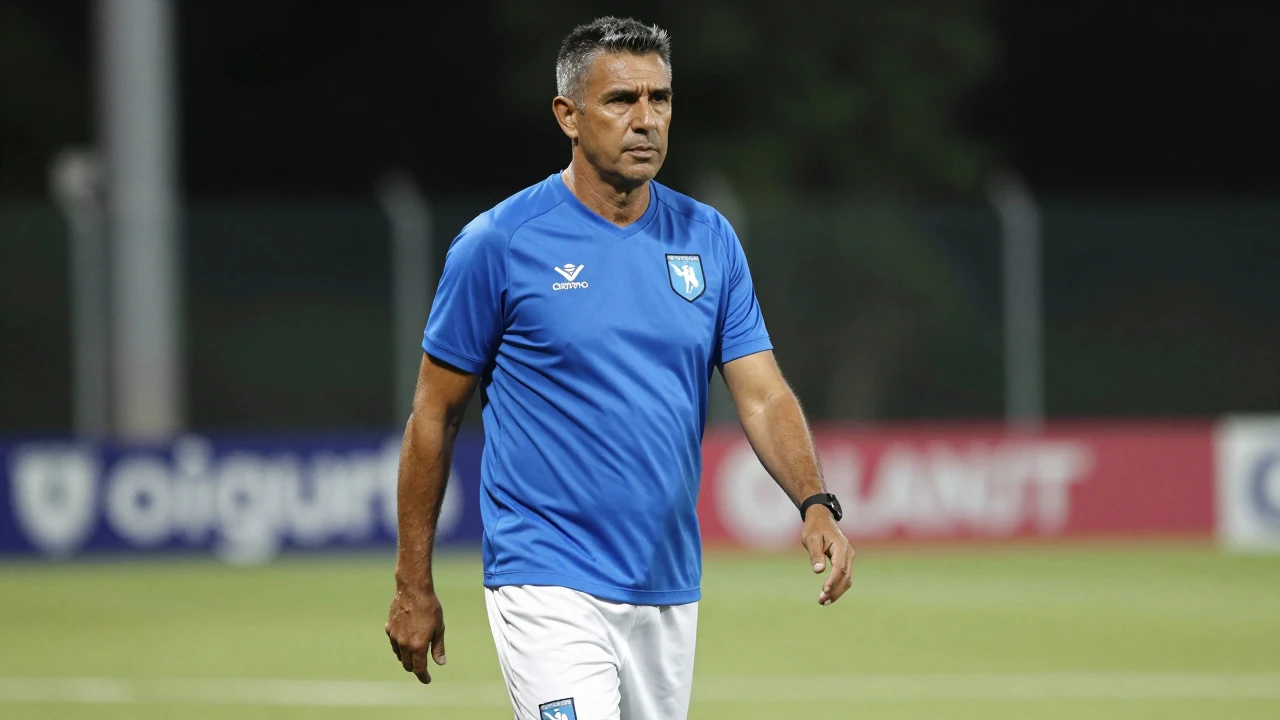

The 1974 World Cup, held in Germany, was a tournament that not only defined the immediate future of La Celeste but also transformed the way football was played on the international stage. Uruguay arrived at this World Cup with a talented squad, but what truly stood out was how their coach, Juan Carlos Corazo, implemented a tactical system that would revolutionize Uruguayan football and lay the groundwork for future generations.
Corazo introduced a more dynamic and flexible approach, moving away from the traditional 4-3-3 that had characterized the national team for years. Utilizing a 4-4-2 formation, he aimed for greater defensive solidity, allowing his full-backs to advance and support the attack-something that was not common in Uruguayan football at that time. This tactic not only proved effective but also showcased a novelty that bewildered opponents, leading La Celeste to display a more offensive and attractive style of play.
One of the most memorable moments of the tournament was the match against the powerful Brazilian team in the group stage. Despite Brazil's star-studded lineup featuring players like Jairzinho and Tostão, Uruguay managed to contain their attack, and thanks to an excellent collective performance and the figure of goalkeeper Ladislao Mazurkiewicz, they secured a draw that was seen as a moral victory. This result not only boosted the team's morale but also demonstrated that Uruguay could compete with the best by adopting their new playing philosophy.
In the match against Sweden, La Celeste shone with a fluid style of play that surprised spectators. The combination of a robust defense and quick attacking play allowed Uruguay to score three goals, an achievement that echoed in the history of world football. This match was the perfect reflection of the tactical evolution that Corazo had instilled, where the team moved as a cohesive unit, capitalizing on every opportunity and blurring the lines between defense and attack.
Although La Celeste did not advance beyond the group stage, the tactical revolution initiated in 1974 had a lasting impact on the identity of Uruguayan football. The way the team adapted and evolved in this tournament laid the foundation for future success, including the memorable victory in the 1980 World Cup. La Celeste demonstrated that while the final result is not always as desired, the ability to reinvent and adapt is what defines a true giant in football.
Today, as La Celeste prepares for the 2026 World Cup, it is essential to remember those lessons from the past and how tactical innovation was key to reaching new heights. The story of 1974 lives on, reminding us that football is not just a matter of talent but also of strategy and boldness.